The Contrarian Approach to Value Investing
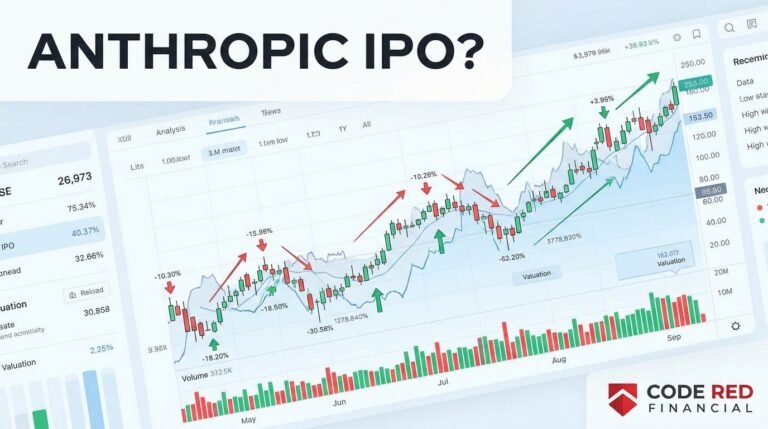
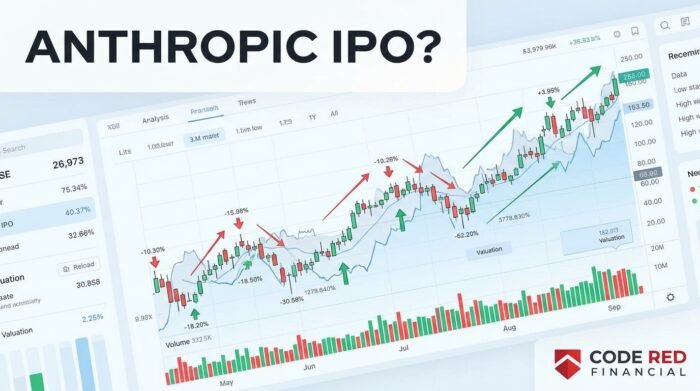
It has been less than a week since Anthropic’s IPO hit the public markets and while I considered acquiring some of the stock via my brokerage firm, I opted instead to focus on many of the tech stocks that had been battered by the savage market sell-off in the sector. I decided to purchase Nvidia, which I did at $128.44 on 11-20/2026 along with a few more stocks. I decided to do this as a result of the historical performance of IPOs, particularly high-profile IPOs, that statistically have not done well shortly after they go public.
Now, I will say, however, that this was not the only reason for my decision. I am what you would call a value investor and quite frankly, I did not see a lot of value in the offering and, even more significant, their commitments, which total out to approximately a trillion dollars, aren’t reassuring. Obviously, this is a first-to-market LLM company, so it is quite difficult to know what type of valuation is justified.
The company’s revenue has been growing rapidly, a fact that cannot be overlooked, and thus in the end what is almost a two-trillion-dollar company at the time of the article might very well turn out to be a paltry market value for what promises to be one of the most consequential companies in quite some time.
There was a recent study that highlighted how companies performed months after going public; I believe it was Motley Fool.
What History Says About IPO Performance
Whatever its exact origin, the finding is well documented, and it isn’t flattering. One widely circulated analysis reported that newly public technology companies were priced down an average of 14% six months after listing and down an average of 27% at the one-year mark. LPL Research, measuring from the first day’s close, found the median IPO trailing the market by roughly 12.5% over the following year. Nasdaq’s analysis of IPOs from 2010 to 2020 found that three years on, nearly two-thirds were behind the market, most by more than ten percent.
Hype tends to make matters worse, not better, and the recent past supports that. SpaceX leapt above $200 after its June listing, slid as low as roughly $108, and now trades near its original $135 price. Statistics are not destiny, but they do tilt the odds, and I prefer to start from the favorable side of the tilt.
The Risks of Chasing the Anthropic IPO
I just want to be clear about what worries me, since the revenue story is so compelling that it can drown out virtually everything else.
- Valuation. The roughly two-trillion-dollar figure is fully diluted, meaning it counts options and restricted stock units that have not yet vested. Based on shares outstanding at the first trade, the figure was closer to one and a half trillion. Against the $33.2 billion in revenue reported for the first nine months of 2026, even the lower number is a steep multiple, and by my math the higher one is roughly forty-five times annualized revenue.
- Losses. The same filing disclosed a net loss of $104 billion over those nine months. Some of that may be non-cash, but the computing costs behind it are real.
- Share supply. Up to 315 million shares held by executives, employees and other insiders could have become eligible for sale on day one, and later lockup expirations add further pressure.
- Commitments. The spending obligations I mentioned have to be honored whether growth continues or not.
- Sector contagion. Analysts expect the stock to behave as a proxy for the broader AI trade, so another tech sell-off can drag it lower regardless of how the business itself performs.
The Rewards: Why I Won’t Dismiss It
Being a value investor doesn’t mean being blind to growth. Revenue climbed 1,206% against the same period a year earlier, the offering priced at $83 against an initial range of $70 to $78, and Anthropic is the first frontier AI company to go public, which makes it the sector’s de facto benchmark.
There is also a fair counterpoint to the statistics above. Academic research on U.S. IPOs found the underperformance concentrated in small-company offerings, with no significant lag among large-firm IPOs compared with similar mature companies. And if revenue keeps compounding at anything near its current pace, the multiple compresses quickly. A company that looks absurdly priced today can look reasonable in two years, which is precisely what I meant when I said two trillion dollars could prove paltry. The reward is real. My issue is that the price already pays for a great deal of it, leaving little margin of safety if growth merely slows from spectacular to excellent.
Why the Balance Sheet Decides It
This is the same filter I use in any chaotic market. A strong balance sheet is what allows an investor to be wrong for a while without being wiped out. So I run the same checks: net debt relative to earnings, interest coverage, free cash flow after capital spending, the debt maturity schedule, and customer concentration. A business that funds itself from the cash it generates can wait out a bad year. One that depends on capital markets cannot.
Anthropic raised a record $81 billion in its offering, which buys it time. Still, a company posting losses of that size relies on investors’ continued willingness to fund the buildout. None of this means its balance sheet is fragile today. It means its strength depends on sentiment staying favorable, and sentiment is the first thing to fall in a sell-off.
Nvidia, whatever turmoil exists at the top, has historically been the opposite: a business that generates enormous free cash flow and funds its growth largely from its own operations. That is the kind of balance sheet that turns a sell-off into a buying opportunity rather than a trap. If its finances deteriorate, I will change my mind just as quickly.
Final Thoughts
So did I choose the sure thing over the future? Hardly. Nothing about Nvidia is guaranteed, particularly with the leadership upheaval, and I may well be wrong about Anthropic. What I am comfortable with is the trade-off. I would rather buy a proven, cash-generating business at a discount after a sell-off than pay a record valuation for a company with record losses.
I am also willing to revisit Anthropic after the lockup periods expire and a few quarterly reports give the numbers some context. If I do, I will scale in gradually rather than all at once. Patience is a position too. As always, past performance does not guarantee future success and this isn’t financial advice; it is simply another way of thinking through the risks and rewards.
Disclaimer: This article is for informational purposes only and does not constitute financial or investment advice. Consult with a qualified 1 financial advisor or tax professional before making any decisions about your investments or retirement accounts
Jay Sadio, MBA