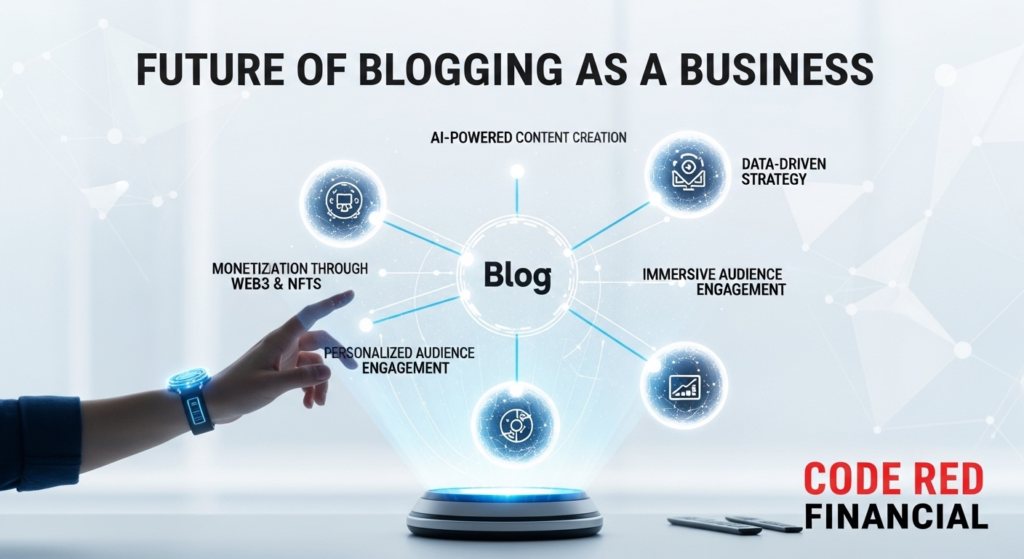
Once the gold rush of the internet era, professional blogging is facing its toughest chapter yet. Here’s what’s really happening — and what it means for your content strategy.
There was a time — not so long ago — when starting a blog felt like planting a money tree. Pick a niche, write consistently, wait for Google to send you traffic, and watch the ad revenue roll in. Countless bloggers built six-figure businesses this way. Some built empires.
That era isn’t dead. But it’s been handed a crowbar and asked to pry itself open — because the landscape has shifted so dramatically that the old playbook now reads more like historical fiction than a business plan.
If you’re a blogger trying to build or sustain a business in 2026 and beyond, here’s the honest, unfiltered truth about what you’re up against — and the strategies that are actually working. Surely, I cannot be the only person who have been assessing the challenges of the blogging landscape currently.
600M+Active blogs on the internet today
7MNew blog posts published daily
~40%Drop in organic traffic for many content sites since 2023
The SEO Foundation Is Cracking
For most blogging businesses, search engine optimization has been the lifeblood — the invisible engine driving “free” traffic to monetizable content. The relationship was simple: rank on Google, get clicks, earn ad money or affiliate commissions. Rinse, repeat.
But Google’s recent algorithmic overhauls — particularly its Helpful Content Updates and the rollout of AI Overviews — have fundamentally destabilized this model. AI-generated answer boxes now sit at the top of search results, delivering instant responses to queries that once drove thousands of monthly visitors to informational blog posts. Why click through to an article when Google tells you the answer right there?
This “zero-click search” phenomenon has been building for years, but the acceleration is now impossible to ignore. Many content-heavy websites have reported traffic drops of 30–50% since 2023. The sites hit hardest? Those built around generic, informational content — “how to boil an egg” type posts that Google can now summarize in a sentence.
“The blogs that thrived on capturing search intent are now fighting an algorithm that has decided it no longer needs them as the middleman.”
The AI Content Paradox
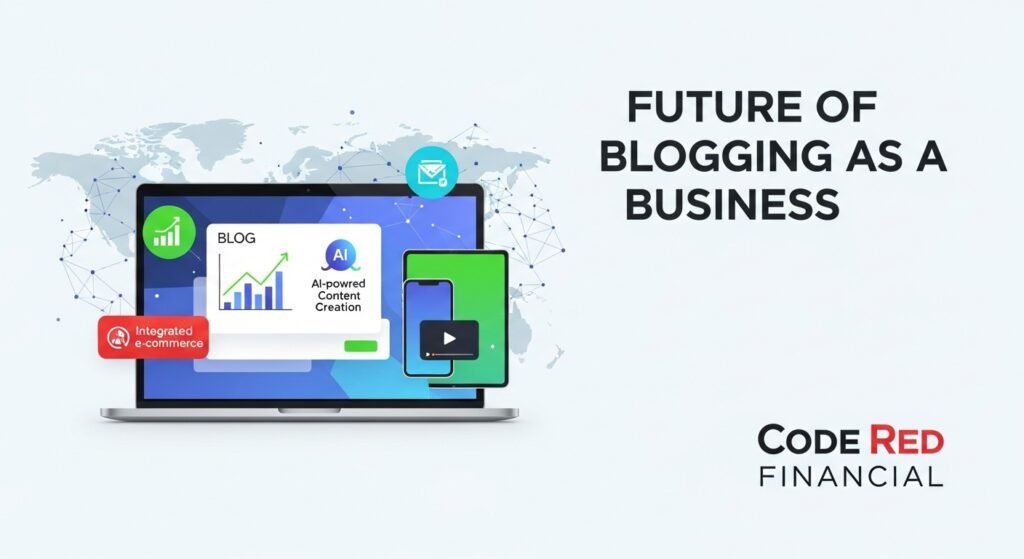
Here’s where things get genuinely complicated. AI tools have dramatically lowered the cost of producing blog content — you can now generate a 2,000-word draft in seconds. On the surface, this sounds like a gift to bloggers. In practice, it’s created a paradox.
Because everyone can produce content cheaply, the internet is now drowning in it. The quality threshold for getting noticed has risen sharply even as the volume of content has exploded. Generic, surface-level writing — no matter how grammatically polished — is essentially invisible now. Google is actively trying to devalue it. Readers are fatigued by it.
The bloggers who are leaning on AI as a content factory are, ironically, accelerating their own irrelevance. Meanwhile, those using AI as a research and editing tool — while still bringing genuine expertise, personal experience, and unique perspective — are finding ways to stay competitive.
The lesson here is uncomfortable but important: the human element isn’t a nice-to-have anymore. It’s the actual product.
The Monetization Squeeze
Even for bloggers still holding onto their traffic, the revenue picture has changed. Display advertising, long the default monetization method, has seen declining CPMs across many niches as ad budgets shift toward video and social platforms. Affiliate marketing remains viable but increasingly competitive, with major platforms like Amazon quietly adjusting commission structures downward over the years.
Sponsored content still works — but brands are demanding more reach, better demographics, and measurable ROI. The casual “sponsored post” that once paid a blogger’s rent is now subject to far more scrutiny.
What does this mean practically? It means that a blog-as-business that relies on a single revenue stream is inherently fragile. The bloggers who are genuinely thriving have diversified: they’re selling courses, digital products, memberships, coaching, or community access. The blog itself has become the marketing channel for a broader business — not the business itself.
“The most resilient blogging businesses today look less like media companies and more like personal brands with multiple product lines.”
Social Media: Ally or Distraction?
The rise of short-form video and algorithm-driven social platforms has pulled audience attention away from the long-form, search-driven blog model. TikTok, Instagram Reels, and YouTube Shorts have created entirely new content ecosystems where a single video can reach millions — something a blog post almost never does organically anymore.
This has led many bloggers to pivot into content creators, spreading themselves across multiple platforms in an exhausting attempt to stay relevant everywhere. The problem? Each platform demands its own format, rhythm, and style — and none of them are owned by you. Algorithm changes, platform shutdowns, or policy shifts can erase your audience overnight.
The smartest approach isn’t to abandon social media — it’s to use it strategically to feed your owned channels. Think of social platforms as a funnel, not a home. Drive people to your email list, your membership, your community. That’s the audience you actually own.

What’s Actually Working Right Now
Despite all of this, blogging as a business isn’t dead. It’s evolving — and the bloggers who understand where it’s going are building genuinely sustainable operations. Here’s what separates the ones thriving from the ones struggling:
Deep niche authority. Broad blogs covering everything for everyone are losing ground fast. Highly specific expertise — the CPA who writes about tax strategy for freelancers, the competitive swimmer who blogs about open-water training — continues to attract loyal, high-value audiences that advertisers and brands still want to reach.
Email lists as the foundation. An email subscriber is worth dramatically more than a social follower or a one-time search visitor. Bloggers who have built robust email communities are far less vulnerable to platform changes. Your list is yours. Nobody’s algorithm can take it away.
Original data, research, and experience. Content that Google and AI cannot easily replicate — original surveys, proprietary case studies, deeply personal narratives, hands-on product testing — holds disproportionate value right now. If you’ve actually done the thing you’re writing about, say so, loudly and often.
Community as a product. The loneliest readers are often the most eager to find their people. Bloggers who’ve built paid or free communities around their content are creating retention and loyalty that pure content sites can’t match. A reader who feels part of something keeps coming back — and pays for the privilege.
The Honest Reckoning
Quite frankly, building a blog-based business from scratch in 2026 is significantly harder than it was in 2015. The barriers to visibility are higher, the competition is fiercer, and the traditional revenue models are under sustained pressure. Anyone who tells you otherwise is probably selling a course about blogging.
But “harder” is not the same as “impossible.” The bloggers who will define the next era of content entrepreneurship are those who stop thinking of themselves as SEO machines and start thinking of themselves as trusted voices building real relationships at scale.
The challenge of the moment is also its opportunity: when everyone else is producing AI-slop at industrial speed, genuine human expertise and authentic connection become rare — and valuable. Now I have been contemplating how to best align the articles I create, and the research conducted to bring these to fruition. However, the goal of Code Red Financial is always to listen to society’s heartbeat and to continue producing high quality material that benefits readers with a profit motive as a secondary reason.
The future of blogging as a business belongs to the creators willing to go deeper, get more specific, build real trust, and stop chasing the algorithm. That’s harder work, but it’s also more durable work — and a lot more meaningful to do and let’s face it change is just about the only constant.
Disclaimer: This article is for informational purposes only and does not constitute financial or investment advice. Consult with a qualified financial advisor or tax professional before making any decisions about your investments or retirement accounts.
Jay Sadio, MBA