Why the Math of the American Dream Broke
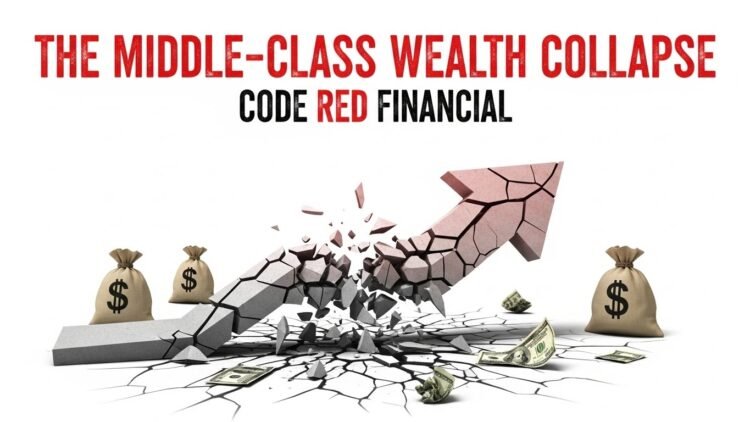
One of the most dangerous lies in modern economics is the “stable” middle class.
If you feel like you’re doing everything right—earning a “good” salary, contributing to your retirement, and limiting your splurges—yet you’re still checking your bank balance before a trip to the grocery store, you aren’t failing. The economy is simply moving the goalposts in the middle of the game.
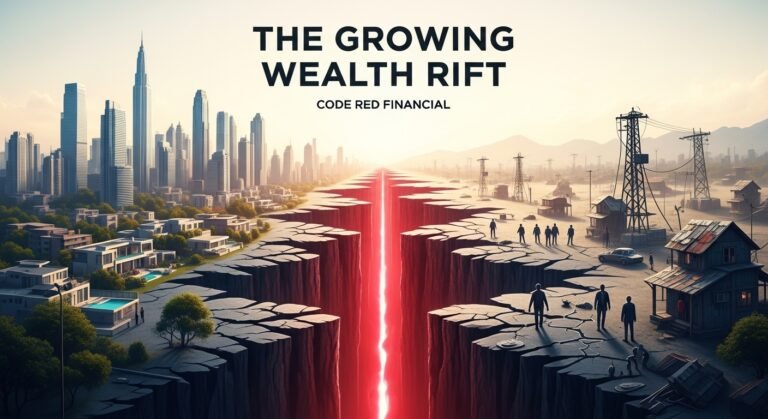
We have entered an era of The Great Divergence. The gap is no longer just between the rich and the poor; it is between those who own assets and those who trade their hours for a paycheck that is losing its “buying power” in real-time. The middle class isn’t just shrinking; it’s being priced out of its own existence and if you do not believe, simply look around you or drive through certain neighborhoods and observe the activities on display there.
The “Quiet” Collapse: Stagnation by a Thousand Cuts
In the 1970s, a single income could realistically support a family of four, a mortgage, and a yearly vacation. Today, dual-income households with advanced degrees are often one medical emergency away from insolvency. This isn’t a failure of work ethic; it’s a failure of purchasing power parity.
To understand the gravity of this, we must look at the cost of survival. While the price of televisions and toys has dropped due to globalization, the price of “non-negotiables”—the things that actually build a middle-class life—has skyrocketed. Since the year 2000, the cost of hospital services has risen by over 200%, and college tuition has jumped by nearly 180%. During that same window, the median household income has struggled to keep pace with basic grocery inflation. We are living in an era where you can afford the latest iPhone, but you can’t afford the home to charge it in.
The 40-Year Wage Ghost
Since 1979, productivity in the United States has soared by over 60%. Workers are more efficient, tech-savvy, and connected than ever before. During that same period, however, hourly pay for the average worker has crawled up by less than 18%.
Where did that extra value go? It didn’t vanish. It was diverted into corporate profits and executive compensation. This is the structural hollowing of the American workforce. For the middle-class family, this means you are working 60% harder to afford a lifestyle that is objectively more expensive and less secure than your parents’ was at the same age. You are running on a treadmill that has been set to an incline you didn’t agree to.
The Housing “Gentry”: The Death of the Ladder
We are witnessing the end of the “starter home.” Historically, housing costs consumed about 25% of a middle-class budget. In 2025, that figure has ballooned to 40% or even 50% in major metro areas.
When housing—the primary vehicle for American wealth creation—becomes a speculative asset held by hedge funds and institutional investors, the middle class loses its ladder. We have moved from a nation of owners to a nation of “lifestyle renters.”
The psychological toll of this shift cannot be overstated. When a family cannot anchor themselves in a community through property ownership, their “wealth” becomes transient. They are no longer building equity; they are paying someone else’s mortgage. This creates a “Gentry” class of those who bought before the spike, and a “Servant” class of those who must spend half their lives working just to keep a roof over their heads.
3 Pillars of the Wealth Erosion
To fix the problem, we have to identify the specific weights dragging the middle class down. It isn’t just “inflation”; it’s a fundamental shift in how basic services are delivered.
| The Factor | The Old Reality | The 2025 Reality |
| Education | A degree was a “Golden Ticket” to a high-paying career. | Degrees are “Table Stakes” often accompanied by six-figure debt. |
| Healthcare | Employers covered the bulk of high-quality care. | High-deductible plans mean “insurance” only kicks in after a catastrophe. |
| Asset Inflation | Stocks and homes grew at manageable rates. | Asset prices are detached from wages, benefiting only those already “in.” |
This table represents the “Middle-Class Squeeze.” Even if you earn more money, the entry fees for a stable life (health, education, and shelter) are rising faster than your ability to earn. You are effectively being taxed by the cost of living before the government even touches your paycheck.
The Actionable Pivot: How to Avoid the Slide
If the traditional path is blocked, you have to find a side door. Staying “middle class” now requires a mindset that is more investor than employee. You can no longer rely on the “system” to provide stability; you must engineer it yourself.
1. Defend Your “Net Flow”
Most people focus on their gross salary—the number on their offer letter. In a high-inflation environment, your only metric that matters is Net Flow—the percentage of your income that you keep after taxes and the “Big Three” (housing, food, transport).
- The Strategy: If your housing cost exceeds 35% of your take-home pay, you are in the “Danger Zone.” You are one layoff away from a total wealth collapse. You must either increase your income through high-leverage skills or reduce your cost through relocation. Stability is no longer found in your current job; it’s found in your mobility. The ability to move to where the math works is the ultimate 21st-century superpower.
2. Diversify Away from the Dollar
In an era of currency debasement and rising prices, holding all your wealth in a savings account is a slow-motion disaster. You are losing 3-5% of your purchasing power every year to the “inflation tax.”
- The Strategy: Move beyond the “savings account” mentality. Use automated tools to move surplus cash into hard assets (commodities, real estate, or high-yield equity) the moment it hits your account. You need to own things that “reprice” with inflation. If the price of everything goes up, you want to be the person who owns the “everything.”
3. Monetize Your Intellectual Property
The “New Middle Class” is increasingly composed of “Solopreneurs” or “Intrapreneurs”—people who work a 9-to-5 but own their own digital assets on the side.
- The Strategy: Build an “audience of one” or a niche expertise online. Whether it’s a specialized newsletter, a consulting framework, or a digital course, having an income stream that you own (and that isn’t tied to a boss’s whim) is the only real job security left. In the 1950s, security was a pension. In 2025, security is a revenue-generating skill set.
The Great Skill-Stacking Era
To survive the wealth collapse, you must also realize that a single skill is no longer enough. The middle class used to be filled with “specialists” who did one thing for 30 years. That world has largely vanished, gone like a thief in the night and to top it off the emergence of Gen AI, has thrown another wrinkle in the plans of virtually every industry, an issue that workers being laid off in vast numbers are now wrestling with.
The new survivors are Skill Stackers. They combine a primary professional skill (like accounting or engineering) with secondary “multiplier” skills (like AI prompt engineering, digital marketing, or public speaking).
- Engineering + Sales = A founder.
- Accounting + Data Visualization = A high-level consultant.
- Teacher + Content Creation = A global education brand.
By stacking skills, you move yourself out of the “commodity labor” pool—where wages are stagnant—and into the “unique talent” pool, where you can dictate your price and protect your wealth.
The Verdict: The Dream Isn’t Dead, But the Map is Wrong
The American Dream of 1950 is a fantasy in 2025. The idea that you can passively drift into wealth by simply “showing up” to a job is the most dangerous thought you can have. But a new dream is possible for those who recognize the collapse for what it is: a structural shift. As a matter of fact, recent data points to an alarming amount of adults who have moved back home with parents, splitting rent and even parents moving in with their children to mitigate the wallet draining impact of cost of living, with housing being at the top of that pyramid.
The middle class is being split into two groups: those who are price-takers (who accept whatever wage and cost of living is handed to them) and those who are price-makers (who control their assets, their location, and their income streams).
To avoid being priced out, you must stop being a passive participant in the “work-spend-debt” cycle. You have to become an active manager of your own personal economy. The middle-class collapse is a tragedy for those who wait for the world to go back to “normal.” For those who adapt, it’s a wake-up call to build something more resilient, more decentralized, and more personal.
The math of the American Dream has broken, but your personal math doesn’t have to. It’s time to stop playing a game that was designed for a different century and start building a fortress around your financial future.
Disclaimer: This article is for informational purposes only and does not constitute financial or investment advice. Consult with a qualified financial advisor or tax professional before making any decisions about your investments or retirement accounts.
Jay Sadio, MBA