
A Contrarian Look at the Billionaire Claim Everyone’s Talking About
Listen, I must admit that when I first saw the headlines, I assumed it had to be an AI‑generated, sensationalized fever dream. But no — the man who just secured an almost one‑trillion‑dollar pay package and is simultaneously suing OpenAI for over $100 million is now attempting to persuade the general population that money will become irrelevant. Yes, you read that accurately. Not less important. Not transformed. Irrelevant.
Now, before you brace yourself for a bash‑and‑dash hit piece, let me set the tone. This isn’t that. There are plenty of places to find click‑rage, tribal dunking, and digital pitchforks. What I want to do here is something far more useful: assess his statement objectively, explore why he said it, consider the realistic timeframe of such a possibility, and — most importantly — unpack what it means for you in the short term.
Because quite frankly, it’s easy for a billionaire with zero retirement anxiety to make sweeping proclamations about the end of money. When you’re financially insulated from every conceivable life event, the idea of a post‑scarcity economy feels almost poetic. For everyone else, it feels… theoretical at best, dismissive at worst.
And yet, buried beneath the headline‑friendly soundbite is a real conversation worth having.
Why Would a Billionaire Claim Money Is Becoming Irrelevant?
Let’s start with the obvious: people with extreme wealth often view the world through a different lens. Not because they’re out of touch by default, but because their lived reality is fundamentally different.
When you no longer exchange time for income, when your investments generate more in a day than most people earn in a year, when your basic needs and your children’s needs and your grandchildren’s needs are secured for generations — money stops feeling like a constraint. It becomes a tool, not a tether.
From that vantage point, the idea of a future where AI automates labor, abundance becomes the norm, and scarcity dissolves into history doesn’t sound absurd. It sounds inevitable.
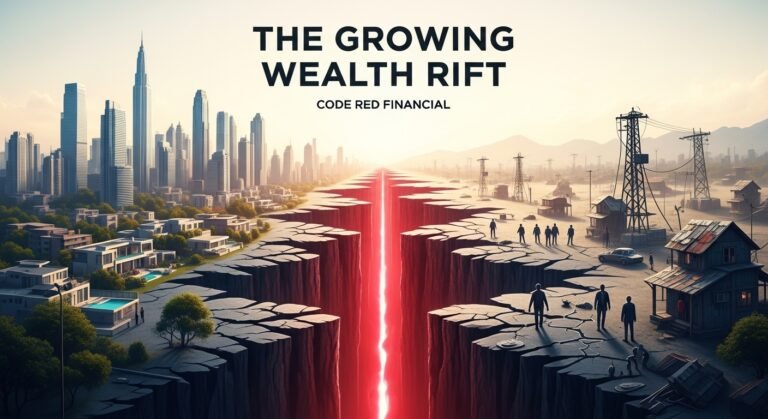
But here’s the contrarian angle: that perspective is a luxury of those who already live in a personal post‑scarcity bubble. For the average person, money is not irrelevant. It is oxygen. It is stability. It is the difference between opportunity and limitation.
So when a billionaire says “money won’t matter soon,” what he really means is:
“Money doesn’t matter to me anymore, and I believe technology will eventually make that true for everyone.”
That’s a very different statement — and a far less universal one.
Is a Post‑Money Future Even Possible?
Let’s break this down analytically.
1. The Technological Argument
The claim hinges on the idea that AI and robotics will eventually automate nearly all labor, making goods and services so abundant that traditional economics collapse. Think Star Trek replicators, but without the starships.
Is that possible? Yes.
Is it imminent? No.
Even if AI accelerates productivity exponentially, the infrastructure, energy, distribution, and political systems required to support a post‑scarcity world are nowhere near ready. Technology evolves fast. Institutions evolve slowly.
2. The Economic Argument
For money to become irrelevant, scarcity must disappear. But scarcity isn’t just about physical goods. It’s about:
- land
- attention
- status
- influence
- time
- governance
- access
These things don’t magically become abundant because robots get better at making cars and writing code.
3. The Social Argument
Even if abundance becomes technologically feasible, societies don’t automatically reorganize themselves around fairness. Power structures resist change. Wealth consolidates. Systems protect incumbents.
A world where money is irrelevant requires not just innovation, but collective will, policy transformation, and global coordination — three things humanity has historically struggled with.
So yes, a post‑money world is theoretically possible. But it’s not around the corner. It’s not five years away. It’s not even one major AI breakthrough away.
Why the Claim Resonates — and Why It’s Misleading
There’s a reason this idea spreads so quickly: it taps into a deep cultural fatigue. People are tired of financial pressure. Tired of inflation. Tired of wages that don’t match productivity. Tired of feeling like they’re running on a treadmill that keeps speeding up.
The idea that money might one day stop mattering feels like a warm blanket on a cold night.
But here’s the uncomfortable truth: the people most excited about this idea are the ones who can least afford to rely on it.
That’s why we need to approach this claim with both curiosity and caution.
So What Does This Mean for You Right Now?
Let’s cut through the noise.
Even if money becomes irrelevant in the future, you still live in a world where it is very relevant today. Your rent, your groceries, your healthcare, your kids’ education — none of these things are payable in “future abundance credits.”
So here’s the grounded, practical takeaway:
Do not stop planning for your retirement.
Do not stop saving for your children’s future.
Do not outsource your financial security to a hypothetical utopia.
Hope is wonderful. Optimism is healthy. But financial planning is responsibility, not pessimism.
Expect the best. Plan for the worst. That’s not cynicism — that’s wisdom.
A More Honest Interpretation of the Billionaire Mindset
Let’s give credit where it’s due: the statement wasn’t made out of malice. It was made out of vision. Billionaires often think in decades, not pay cycles. They imagine futures most people don’t have the bandwidth to contemplate.
But that doesn’t mean their predictions are prescriptions.
A billionaire saying “money won’t matter” is like a marathon runner saying “you don’t need to worry about walking uphill.” It’s true — for them. They’ve trained for it. They’re conditioned for it. They’re equipped for it.
You, however, still need shoes, hydration, and a plan.
The Contrarian
Here’s the part most articles won’t say out loud, it is easy to declare the irrelevance of money when you already have enough of it to last multiple lifetimes. However, to be clear, this isn’t to say that his outlook is wrong. It just makes it incomplete, because so many variables exist.
The future may very well bring radical abundance. AI may transform the economy in ways we can barely imagine. But until that day arrives — and it will not arrive suddenly — the most rational, grounded, self‑protective thing you can do is continue building your financial foundation.
Because if money ever becomes irrelevant, the people who prepared will be fine. And if it doesn’t, the people who didn’t prepare will not be.
Disclaimer: This article is for informational purposes only and does not constitute financial or investment advice. Consult with a qualified financial advisor or tax professional before making any decisions about your investments or retirement accounts.
If you have been enjoying the articles produced or even if this is your first time, please be certain to share the articles to help us build the best free financial platform on the web.
Jay Sadio, MBA