
😔 The Invisible Crisis: Financial Depression in the Modern Economy
Lately, I have been preoccupied with the fundamental structural shifts reshaping the job market and the economy at large. These changes are creating an invisible crisis: financial depression.
The recent, widespread phenomenon of corporate layoffs—often euphemistically rebranded as “right-sizing“—has torn through communities, leaving a wake of emotional distress that is frequently as debilitating as the fiscal shock itself.
Interestingly, as I sat down at my desk to scroll through the usual deluge of Cyber Monday deals, I was struck by a powerful disconnect. I could not help but think about those struggling to cope with the profound uncertainty and insecurity of their current reality.
The term “right-sizing” attempts to sanitize a harsh reality, but for the individual holding the proverbial pink slip, it’s a gut punch that triggers a profound descent into anxiety, worry, and in many cases, clinical depression. We are witnessing a fundamental structural shift, accelerated by the rise of Artificial Intelligence (AI). As a topic I’ve frequently covered, Generative AI is a double-edged sword: a “gift that keeps on giving” for the benefiting organizations, and a taker for the employee whose tasks have been algorithmically absorbed. The fear of being replaced isn’t just existential; it’s an increasingly concrete financial threat that directly impacts mental well-being.
Reminiscing about my pre-Thanksgiving layoff in 2001, I distinctly recall the sudden anxiety that gripped me. That gut punch triggered a mini-depressive state, when days turned into weeks and weeks into months—a chaotic scramble to replace a high-salary role and maintain a comfortable lifestyle. Even with manageable bills and the bedrock of a practiced Zen philosophy, the psychological strain was immense.
As we ponder the raw emotional toll of this uncertainty, a universal question rises: In times of financial darkness, what is your pillar of comfort?
The Data-Driven Link: Financial Strain and Mental Health
The psychological impact of financial strain is not a subjective anecdote; it is a meticulously documented crisis. Decades of research have established a clear, often cyclical, link between economic distress and adverse mental health outcomes.
The Financial-Mental Health Vicious Cycle
The evidence is overwhelming:
- Objective and Subjective Strain: Studies consistently show that both objective financial strain (low income, debt, difficulties covering expenses) and the subjective perception of financial insecurity are strongly associated with higher rates of anxiety and depression. A feeling of being “financially vulnerable” is a powerful predictor of poor mental well-being, often trumping objective income figures alone (Source: Aging and Mental Health, 2025; Financial Health Pulse, 2023).
- Accumulated Stress: Longitudinal research, such as that from the USC Dornsife College, demonstrates that the emotional residue of money struggles—especially when experienced in both childhood and adulthood—can linger for decades, with symptoms of anxiety and loneliness surfacing nearly two decades earlier for those who grew up financially insecure. The accumulation of economic stress has a measurable, lasting toll.
- The Debt Burden: A large-scale meta-analysis of 65 papers found that debt, particularly unsecured personal debt and medical debt, is robustly associated with mental health issues. The research is stark: people with medical debt are three times as likely to have mental health conditions like anxiety and depression. Furthermore, debt burdens have been linked to an increased risk of suicide attempts (Journal of Clinical Psychiatry).
The conclusion is unambiguous: financial and mental well-being are inextricably intertwined. Financial stress is not merely an inconvenience; it is a major social determinant of health, reshaping an individual’s quality of life and future health trajectory.
The New Economic Precarity: AI and Layoff Anxiety
The current wave of layoffs— aggressive inflation, higher interest rates, economic instability, and technological adoption—is dramatically amplifying this financial-mental health connection.
The Layoff Landscape: 2023-2024 Data
The surge in mental health issues is visible in workforce data:
- Mental Health Leaves are Skyrocketing: In the first quarter of 2024, over one in ten (11%) of all leaves of absence in the U.S. were due to mental health, representing a 22% increase compared to the first quarter of 2023 (Source: ComPsych Corporation). In total, more Americans took mental health-related leaves than those for accidents, cancer, COVID-19, and heart disease combined.
- Burnout and Job Insecurity: Data from 2024 shows that 48% of employees cite job insecurity as a cause of poor mental health at work, and 41% cite financial stress (Source: Yomly/Workplace Mental Health Statistics). Across industries, 52% of employees report feeling burned out in the past year.
The AI Shadow: Erosion, Not Just Displacement
The looming shadow of Generative AI (Gen AI) introduces a new layer of anxiety. For many, the worry isn’t just about the current market; it’s about the very future of their occupation.
- Exposure to Automation: A report by Goldman Sachs projects that AI could replace the equivalent of 300 million full-time jobs globally and that two-thirds of jobs in the U.S. and Europe “are exposed to some degree of AI automation.” The effects are not limited to blue-collar work; highly educated, white-collar workers are often the most likely to be affected.
- The “Iceberg Index”: Research from MIT and Oak Ridge National Laboratory (ORNL) suggests that the visible layoffs are only the tip of the iceberg. Their “Iceberg Index” finds that existing AI systems already have the technical capacity to take over 11.7% of the U.S. workforce in terms of tasks, noting a “quiet erosion” where human labor is being outperformed and reorganized rather than abruptly displaced. Cognitive-heavy, repetitive functions like risk modeling and compliance review are increasingly delegated to algorithms.
- Worry and Distress: Workers who report being worried that AI might make some or all of their job duties obsolete are significantly more likely to report that their work has a negative impact on their mental health (Source: APA 2023 Work in America survey). The fear of the unknown and the loss of a sense of control are directly linked to psychological distress.

Forging Financial Resilience: 7 Strategies to Cope
Coping with the convergence of financial strain and mental distress requires a two-pronged strategy: addressing the emotional crisis and taking decisive, rational financial action. This is the integration of Zen-like inner calm with pragmatic financial engineering.
The Mindful Pillars: Emotional & Psychological Coping
- Acknowledge the Crisis and Seek Support: Your feelings of anxiety, shame, or hopelessness are not a moral failing; they are a normal reaction to a significant life trauma. Healthy coping mechanisms—like talking to a trusted friend, family member, or a mental health professional—can help alleviate feelings of isolation and reframe seemingly insurmountable problems (Source: HelpGuide.org). Bottling up your money worries only amplifies them.
- Activate Your Center (The Zen Principle): As I found comfort in my martial arts practice and Buddhist Zen principles, you must identify your own Pillar of Comfort. This is the non-negotiable, inexpensive activity that provides stress reduction and a sense of control: meditation, regular exercise, spending time in nature, or a hobby. Taking care of yourself—getting enough sleep, eating well—is not a luxury; it is the fundamental infrastructure for making sound decisions.
- Check Your Perceptions: Financial stress often leads to catastrophic thinking—assuming the worst-case scenario will certainly happen. While you must not ignore reality, you must check if your perception is accurate and balanced. As the research suggests, even when a financial situation improves later in life, the emotional residue of early hardship can linger, meaning you may continue to feel insecure even when you’re objectively better off. Focus on what you can control now.
The Actionable Path: Financial & Practical Coping
- The Financial Inventory and Roadmap: The most stress-relieving action you can take is to regain a sense of control. Avoiding bills and statements only exacerbates the problem. The first step, however painful, is a complete, honest inventory:
- Income: List all sources (salary, benefits, side hustles).
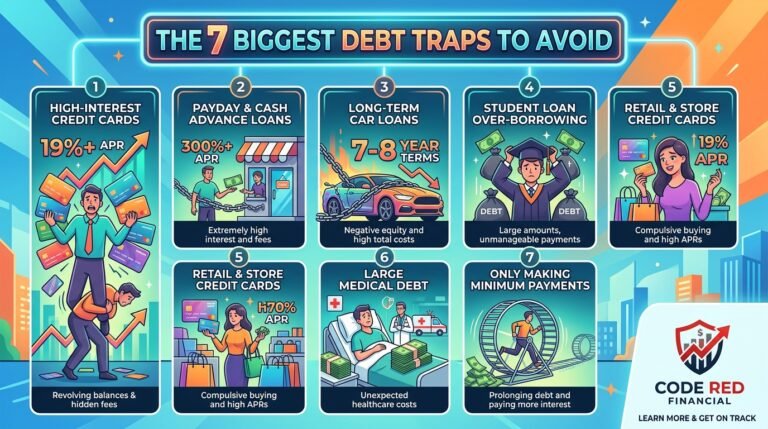
- Debts: Detail all debts, including interest rates, minimum payments, and overdue amounts. Prioritize high-interest, unsecured personal debts first.
- Spending: Track every dollar for at least a month.
- The Budget/Plan: Once you have the data, you can create a clear roadmap for cutting non-essential costs and setting realistic, achievable goals—like reducing debt by a specific amount each month or building a small emergency fund.
- Proactive Creditor Communication: Anxiety often stems from avoidance. If you are struggling, reach out to your creditors before you miss a payment. Explain your situation. Most lenders are willing to work with you—offering deferred payments, extended loan terms, or lower interest rates—to reduce your monthly burden. Good communication with lenders can alleviate immense stress.
- Invest in Financial Literacy: A lack of financial literacy directly contributes to poor coping with financial difficulties. By dedicating time to educate yourself (through free online resources, books, or workshops) on budgeting, debt management, and financial planning, you empower yourself to make informed decisions. Even small changes, like cutting a single non-essential cost, can provide a sense of agency that improves mental well-being (Source: Transformations Network).
- Build Your Financial Emergency Fund: The single greatest buffer against the anxiety of job loss or unexpected expenses is a robust emergency fund. While building six months of expenses may seem daunting during a crisis, start small: aim for a ‘starter’ fund of $1,000. This small safety net can turn a sudden car repair or medical bill from a catastrophic event into a manageable problem, directly lowering your chronic, psychological stress load.
The Future of Financial Health
The forces reshaping the global economy—from technological acceleration to corporate volatility—have made financial resilience inseparable from mental resilience. The new normal is defined by a heightened awareness of job insecurity, whether from cyclical downturns or the quiet erosion of AI.
The path through financial depression is not one of denial, but of pragmatic, data-driven action fused with mindful self-care. You are not alone in this struggle; millions are navigating the same stormy waters. By confronting the numbers head-on, building a clear financial plan, and actively nurturing your mental health, you are not just surviving; you are future-proofing your life against the invisible crisis of financial stress.
Disclaimer: This article is for informational purposes only and does not constitute financial or investment advice. Consult with a qualified financial advisor or tax professional before making any decisions about your investments or retirement accounts.
Jay Sadio, MBA