Building Wealth in Uncertain Times
If you have been in a cryochamber since 2025 and have now been awakened from your hibernation, welcome to 2026. WOW, the year has begun with a literal bang with geopolitical activities, economic power wrangling with the Federal Reserve, inflation risks, and job growth fears. And before you think that is all, think again; but for now, let’s focus on some of the immediate issues at hand.
You know that feeling. You walk out of the grocery store with two bags of essentials—milk, eggs, maybe some coffee—and you look at the receipt. It hits you in the gut. You haven’t changed your lifestyle, you haven’t bought anything extravagant, but somehow, your money just doesn’t stretch as far as it did two years ago.
On a recent visit to a Publix Supermarket, a popular grocery chain in several southern states in the US, I noticed that a specific item I purchase several times per year had undergone its second price increase—from $4.99 at the start of 2025, to $5.99, and now $6.97. This prompted me to review the store’s pricing strategy since the Covid pandemic, and frankly, I was astonished to discover that out of all the major stores I shop at, Publix was the only one that hadn’t meaningfully reduced prices during that time frame as other competitors had done.
So, what’s the point of this story? It’s simply this: we need to be strategic about where we spend our hard‑earned dollars, in much the same way we approach investing.
It isn’t just the grocery store, either. Open your mail and you’ll likely find another culprit of this “silent theft”: health insurance premiums. While you were asleep, the cost of coverage continued its relentless climb. While industry narratives often blame labor costs, the reality is, it is often driven by a systemic demand for profit growth that is characteristic of our capitalist-driven society and particularly, whenever you have a product or service that is so inelastic such as healthcare, cost will almost always be driven higher without serious outside influence of some kind. Like your grocery bill, your premium is a recurring tax on your existence that inflation—and corporate margins—love to feast upon.
For a long time, we had it easy. We lived through a “Goldilocks” economy where inflation was barely a whisper. You could stick money in a savings account, ignore it, and feel reasonably safe. That era is over. The economic weather has shifted, and we aren’t just dealing with a passing storm; we are looking at a changing climate.
Navigating a high-inflation decade requires a complete rewrite of the financial rulebook. The strategies that worked beautifully in 2015—hoarding cash, chasing high-growth tech stocks with zero profits, ignoring commodities—are the exact strategies that will erode your wealth today.
If you feel like you’re swimming upstream, you aren’t crazy. You’re just playing by old rules in a new game. But here is the silver lining: inflation doesn’t have to make you poorer. In fact, historically, high-inflation periods have been massive wealth-building opportunities for those who knew how to pivot. It’s time to stop saving and start preserving. Here is how you build an inflation-proof fortress around your financial future.
The Mental Shift: Why “Safety” is Now Dangerous
The hardest part of this transition isn’t the math; it’s the psychology. We are conditioned to believe that cash is safe and investing is risky. But when inflation is running hot—say, anywhere from 4% to 8%—holding cash is a guaranteed loss.
Think about it this way: If inflation is at 7%, your money in the bank isn’t staying still. It is actively rotting. It is losing 7% of its purchasing power every single year. If you leave $100,000 in a low-interest savings account for a decade of high inflation, you might still see “$100,000” on the screen, but it will only buy what $50,000 buys today.
That is the silent theft of inflation. When your health insurance premiums and daily essentials rise faster than your savings can grow, the erosion is even more aggressive. To build wealth right now, you have to get comfortable with being uncomfortable. You have to move money out of the “safety” of cash and into assets that might fluctuate in price day-to-day but will hold their value year-to-year. In this environment, volatility is annoying, but cash is fatal.
The Equity Strategy: Chasing “Pricing Power”
When news headlines scream about inflation, the stock market usually throws a tantrum. People panic and sell. But fleeing the stock market entirely is usually a mistake. You want to own businesses. Why? Because businesses are living, breathing engines that can react to changing prices.
However, you can’t just throw a dart at the S&P 500 anymore. In a high-inflation world, not all stocks are created equal. During the low-inflation tech boom, investors loved “growth” stocks—companies that lost money today but promised billions in ten years. High inflation murders those stocks because future money is worth less than current money. Instead, you need to hunt for one specific quality: Pricing Power.
Pricing power is the ability of a company to raise its prices without losing customers. This is why the healthcare sector remains such a massive economic driver; even as health insurance premiums soar, the service remains a necessity. If a budget clothing retailer raises prices by 20%, you stop shopping there. But if your electric company raises rates? You pay it. If your favorite toothpaste costs a dollar more? You grumble, but you buy it. This decade is about owning the companies that make the things we need, not just the things we want.
- Consumer Staples: Think food, hygiene, and household essentials. These companies pass their higher costs directly to the consumer, protecting their profit margins—and your investment.
- Energy and Utilities: The lights have to stay on. Energy stocks have historically been some of the best performers when inflation runs hot.
- The Dividend Factor: Look for companies with a long history of raising dividends. In a stagnant market, that quarterly check is your lifeline. It’s real cash flow that you can reinvest or use to cover rising living costs.
Getting Real: The Hard Asset Rotation
When paper money starts acting funny, smart money moves to “real” things. This is often called the “hard asset rotation.” It’s a flight to assets you can kick, touch, and see.
Real Estate Real estate is the heavyweight champion of inflation hedging. It works on two levels. First, the asset itself appreciates. As the cost of labor, lumber, and concrete goes up, it becomes much more expensive to build new houses. This pulls the value of existing homes up. Second, if you are an investor, you have cash flow that adjusts. If you own a rental property, you aren’t stuck with a fixed income; when the lease is up, you adjust the rent to match the market.
You don’t need to be a landlord dealing with leaky toilets to benefit from this, by the way. Real Estate Investment Trusts (REITs) allow you to buy shares in massive real estate portfolios. A pro-tip for this decade? Look for REITs with short lease structures—like apartment buildings or self-storage units. An office building with a 10-year lease can’t raise the rent for a decade. An apartment complex can raise the rent every year.
Commodities For a long time, commodities were dead money. Now, they are essential. We are talking about the raw materials of civilization: copper, oil, lithium, wheat. If inflation is high, it is usually because these things are expensive. By owning them, you are investing in the very source of the problem. You might consider a small allocation (5% to 10% of your portfolio) to a broad commodity fund or even precious metals like gold. Gold doesn’t pay you interest, but it acts as a fire alarm; when the house is burning down (currency devaluation), gold tends to hold its ground.

The Bond Market Minefield (and the Hidden Gems)
This is where most people get hurt. For forty years, the standard advice was the “60/40 portfolio”—60% stocks, 40% bonds. Bonds were supposed to be the safe ballast. But standard bonds are a disaster in high inflation. If you buy a bond paying 3% interest, and inflation is 7%, you are locking in a guaranteed loss of purchasing power. The math just doesn’t work.
Does that mean you abandon bonds? Not necessarily. You just have to change which bonds you buy. The U.S. Treasury offers Series I Savings Bonds (I-Bonds) and Treasury Inflation-Protected Securities (TIPS). I-Bonds have been the star of the show recently. Their interest rate is strictly tied to the inflation rate. If inflation spikes, your return spikes. They are arguably the best place for your emergency fund right now because they guarantee your cash won’t lose value. There are limits on how much you can buy, but maximizing this allocation is a no-brainer for the conservative part of your portfolio.
Flipping the Script on Debt
Here is a controversial take: In a high-inflation environment, debt can actually be your friend—if it is the right kind of debt. Inflation creates a divide between winners and losers in the debt game.
- The Losers: Anyone with variable-rate debt. If you have credit card debt or an adjustable-rate mortgage, you are in the danger zone. Central banks fight inflation by raising interest rates, which means your monthly payments are going to skyrocket. Paying this off is your number one priority.
- The Winners: Anyone with fixed-rate, long-term debt. If you locked in a 30-year mortgage at 3% or 4%, you have struck gold. Your mortgage payment is fixed at, say, $2,000. But as inflation rages, the value of that $2,000 drops. Meanwhile, your income (hopefully) rises over the years to match inflation. Ten years from now, you will be paying the bank back with dollars that are worth significantly less than the dollars you borrowed. You are essentially shorting the currency to pay for your house.
If you have a low, fixed-rate mortgage, don’t be in a rush to pay it off early. That cash is better served growing in an investment account that outpaces your interest rate.
Your Human Capital: The Ultimate Hedge
We spend so much time looking at charts and tickers that we forget the biggest asset on our balance sheet: our ability to earn. In a high-inflation decade, your career strategy is just as important as your investment strategy. If prices go up 20% over three years—and your health insurance premiums eat a larger chunk of your paycheck—but your salary only goes up 5%, you have taken a massive pay cut. You are poorer, even if the number on your paycheck looks the same.
You have to be aggressive. The days of waiting politely for an annual review are over. You need to advocate for yourself using data. If inflation is 6%, a 3% raise isn’t a reward; it’s a demotion. This is also the time to invest in skills that give you leverage. Industries with high margins—tech, specialized healthcare, consulting—can afford to pay their people more to keep up with inflation. Low-margin industries cannot. Position yourself where the money is flowing.
Mastering the “Lifestyle Spread”
Finally, let’s talk about defense. Wealth building is the gap between what you earn and what you burn. Inflation attacks the “burn” side of that equation aggressively. The most practical thing you can do is avoid “lifestyle creep” when costs are rising. This requires a level of vigilance we haven’t needed in years. It means auditing your subscriptions, cooking more, and being strategic about big purchases.
There is a concept called “front-loading.” In a deflationary world (where prices drop), it pays to wait to buy things. In an inflationary world, waiting costs you money. If you know you need a new roof, a new car, or even a year’s supply of non-perishable goods, buying them now is a form of return on investment. You are locking in today’s lower price against tomorrow’s higher one.
The Bottom Line
Living through a high-inflation decade is exhausting. It feels like the ground is constantly shifting beneath your feet. The grocery store receipts are annoying, and the news is stressful.
However, we must acknowledge a harsh reality: this strategy of “investing to offset costs” is a luxury not everyone shares. For the millions of people living paycheck to paycheck, there is no “extra” capital to move into assets or real estate. For them, inflation isn’t a financial game to be “won”—it is an unrelenting erosion of survival. When health insurance premiums rise to meet profit demands, it isn’t an investment opportunity; it’s a crisis.
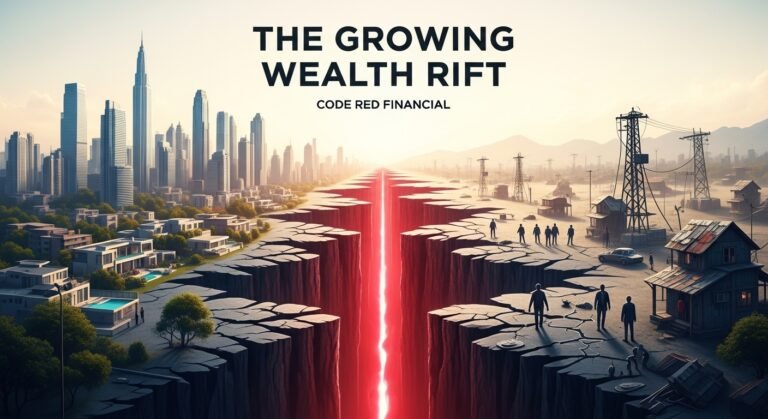
But if you zoom out, the path for those who can pivot is clear. The era of passive, “set-it-and-forget-it” wealth building is paused. To thrive in the 2020s, you have to be active. You have to trade cash for assets, swap growth for value, and leverage the power of fixed debt. Inflation is essentially a massive transfer of wealth. It transfers value from those who hold currency to those who hold assets. The goal of this decade isn’t just to survive the rising prices—it’s to make sure you are on the right side of that transfer.
Disclaimer: This article is for informational purposes only and does not constitute financial or investment advice. Consult with a qualified financial advisor or tax professional before making any decisions about your investments or retirement accounts.
Jay Sadio, MBA